

The PPE Compliance Nightmare
- niyoti
- May 14
- 3 min read

Why Safety Rules Fail in Pharmaceutical Manufacturing
On paper, pharmaceutical manufacturing looks bulletproof. Gowning protocols are ironclad. PPE requirements are documented. Supervisors inspect daily. The FDA demands it.
Yet every year, violations slip through — sometimes for months before they're caught. Sometimes they never are.
This isn't a failure of rules. It's a failure of visibility |

The Perfect Regulatory Setup
(That Doesn't Protect You)
Every major pharmaceutical market has strict, documented PPE requirements:
• FDA 21 CFR Part 211 — mandates protective equipment in controlled environments
• WHO GMP Guidelines — explicit gowning and PPE requirements for all grades
• India CDSCO Schedule M — enforces GMP compliance for domestic manufacturers
• EU GMP Annex 1 — detailed gowning room protocols for sterile manufacturing
On paper, these rules are comprehensive. They cover helmets, safety vests, gloves, cleanroom gowning sequences, and face shields. Manufacturers invest in training. They create SOPs. They conduct monthly audits.
So why do violations happen?
Where Real-World Operations Break Down
1. The Manual Inspection Problem
Quality supervisors can't watch 40 workers across multiple zones simultaneously. Violations happen in blind spots — the corner the supervisor isn't watching. The night shift when oversight thins out. The 30 seconds between inspection rounds. One supervisor physically cannot cover an entire floor.
2. The Time-Lag Problem
Monthly audits catch patterns, not incidents. A violation happens today. It gets documented next month. By then, it's been happening for 30 days. No one knows how widespread it is. The batch may already be compromised.
3. The Training Decay Problem
Workers are trained once at hire. Six months in, compliance drifts. A shortcut saves 10 seconds per gowning. That shortcut becomes normal. Others copy it. The original protocol becomes folklore.
4. The Night Shift Reality
Compliance on night shifts is measurably lower. Fewer QA officers. Higher fatigue. Reduced supervision. Workers remove masks during extended periods in borderline zones. Gloves are reused. Gowning checks become perfunctory. Yet the compliance log looks identical to the day shift.
The Management Visibility Crisis
Here's the uncomfortable truth: Management doesn't know what they don't know.
A quality head reviews the quarterly audit. No major violations flagged. The facility passes inspection. But did the inspector see everything? Probably not — coverage was spotty, some areas weren't reviewed because the inspector ran out of time. The gap between the documented record and floor reality is where regulatory exposure lives.
A plant manager reviews the monthly compliance report: 98% PPE adherence. That looks good. But there's no timestamp. No video. No chain of evidence. No way to verify. Management assumes silence means safety. In pharma, it usually means invisibility.
When Cover-Ups Become Culture
This is where it gets uncomfortable.
When violations are discovered, they create friction. The supervisor who missed them looks bad. The worker gets a verbal warning. Everyone moves on. But the pressure to maintain a clean compliance record creates subtle incentives to downplay or hide incidents.
• A worker removes their helmet in a controlled zone. The supervisor sees it, but doesn't document it formally. Why stir trouble?
• An incident report gets filed but not escalated. It sits in a folder. No one connects the dots.
• Repeat incidents by the same employee never surface because they're never tracked systematically.
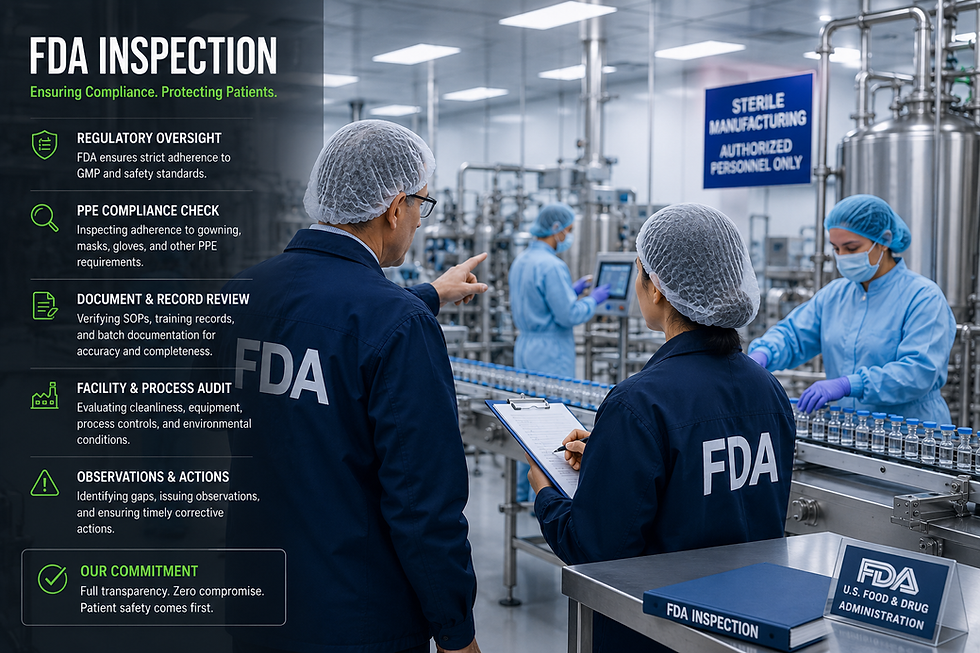
• An FDA inspection is announced. Compliance suddenly becomes perfect for inspection week. The moment the FDA leaves, behaviour drifts back to baseline.
This isn't malice. It's human nature. When you can't measure something in real time, you manage the perception of it instead. And in pharma, that's a regulatory landmine.
The Real Cost of Looking Away
Regulatory Consequence | Business Impact |
FDA 483 observations → Warning Letters → Import Alerts → Consent Decrees → Facility shutdown | Product recalls. Supply chain disruption. Reputational damage. Billions in lost revenue. 18–36 months of remediation. |
You can't solve what you can't see.
And you can't manage what you don't measure in real time. The traditional audit-and-report cycle is broken. It's too slow. Too blind. And it creates the wrong incentives.
Part 2 of this article explores exactly how AI-powered real-time monitoring changes the equation — using your existing CCTV infrastructure, with zero hardware investment.
Because in pharma, invisibility isn't just an operational problem. It's a regulatory landmine.


Comments